
Invoice Email: A Complete Guide to Writing Professional & Effective Messages [With Templates]
Late payments plague freelance businesses everywhere. A large share of invoices miss their due dates, and each invoice email you craft faces this reality.
Delayed or missing payments cost businesses real money. Yet there’s hope in this story: well-crafted templates and a consistent process noticeably improve payment collection.
Talking about money isn’t easy. Your heart races when sending payment requests, wondering if clients will pay on time. But here’s the truth: masterful invoice emails make the difference between steady cash flow and endless payment chasing.
From our own journey managing client payments, we’ve learned that successful invoice emails don’t happen by chance—they’re the result of smart strategies. Whether you handle accounting for a small business or run your own freelance practice, you can learn how to craft emails that get you paid consistently.
Ready to stop worrying about late payments and start getting paid on time? Let’s explore proven tips that will transform your invoice emails from basic payment requests into powerful business tools.
Assess Your Invoice Email Foundation
Experience has taught us that successful invoice emails start with a full understanding of core elements. Just like rate negotiations, every payment request needs careful crafting to maintain professional relationships while ensuring timely payments.
Essential Invoice Elements
Your invoice email success depends on getting the basics right. From our own freelance journey, we’ve learned that a well-structured invoice email combines several critical components:
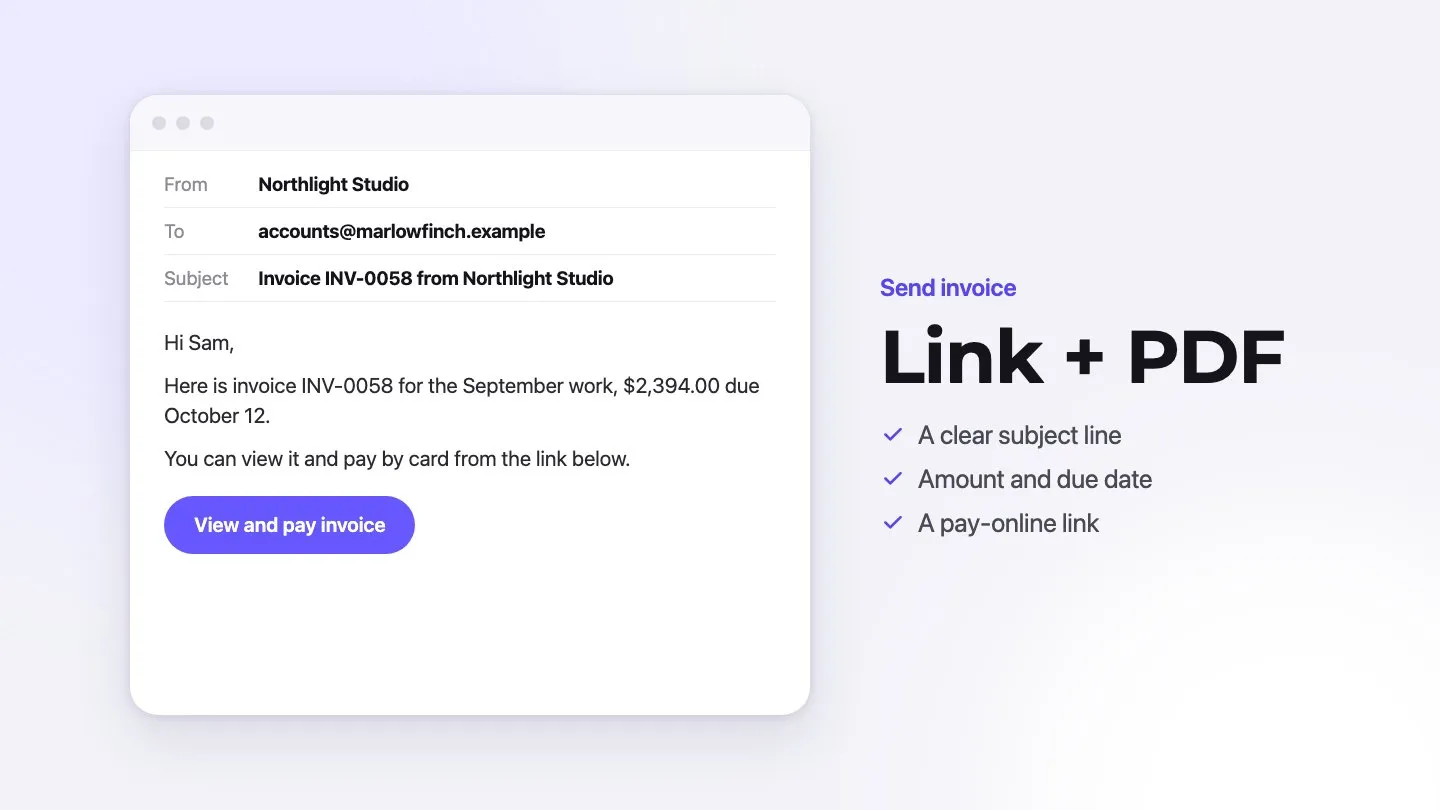
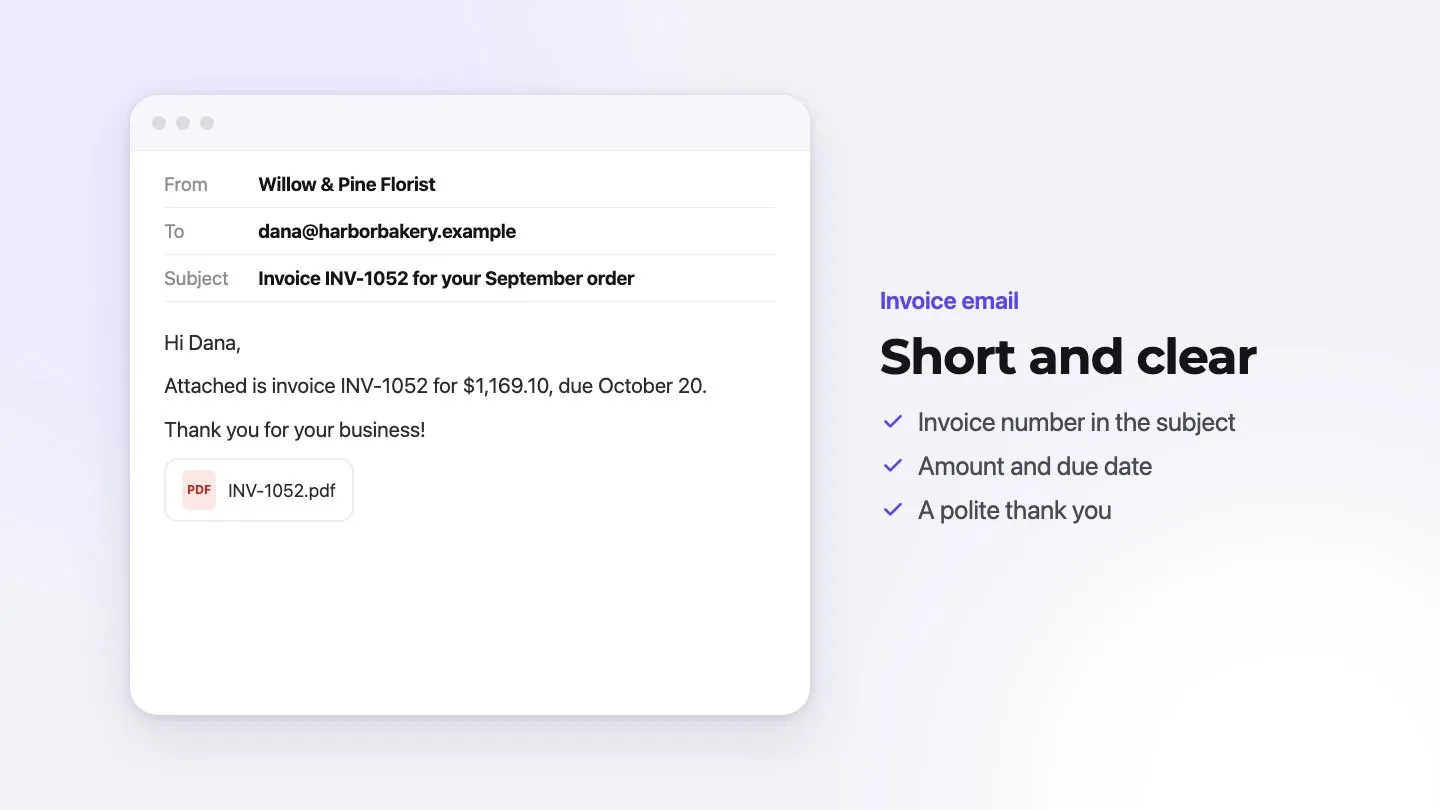
- The invoice as a PDF attachment or a secure link, instead of pasting it into the email body
- Clear service breakdowns with itemized costs
- Straightforward payment terms and methods
- Complete business contact details
- Specific payment deadlines, not vague terms like “upon receipt”
Note that proper documentation creates legal protection for your work. PDF formats ensure your invoices look professional across all devices while giving clients easy record-keeping options.
Common Pitfalls to Watch
Simple invoice mistakes cost businesses money every year. Even worse, many stick to poor practices because they don’t recognize these critical errors.
Talking about invoice mistakes isn’t easy. Your heart sinks when you realize wrong contact details delayed your payment. Sending invoices to incorrect recipients creates unnecessary chase-downs and damages professional credibility.
Value matters more than just getting the paperwork right. Unclear payment terms or surprise fees create instant friction with clients. Limited payment options only make it harder for clients to pay you.
The Power of Timing plays a vital role too. Late invoices mean late payments - it’s that simple. Our systematic approach includes:
- Regular invoicing schedules
- Automated payment reminders
- Double-checked calculations
- Complete information verification
Missing or incorrect invoice details lead straight to payment disputes. Your professional worth depends on attention to these crucial details.
Build Your Invoice Strategy
Experience has taught us that successful invoice payments don’t happen by chance—they’re the result of smart timing and clear communication. From our own freelance journey, we’ve learned that a systematic approach creates consistent results while building stronger client relationships.
Strategic Timing Matters
Value matters more than just sending invoices. Send them early in the working week, when your client’s accounts team is processing mail. Weekly or fortnightly billing cycles can also smooth your cash flow compared with monthly invoicing.
Friday invoices often get buried in weekend email pile-ups. Your timing strategy needs to align with client payment cycles. Note that understanding your client’s internal processes helps match your schedule to their payment routines.
Clear Payment Terms Win
Talking about money isn’t easy. Yet specific payment instructions make it much easier for clients to pay on time. Your payment terms should include:
- Specific due dates instead of vague deadlines
- Multiple payment options with account details
- Clear late payment consequences
- Early payment rewards
Document everything in contracts and invoices. This protects both parties while preventing disputes. A simple “thank you” note also keeps the tone friendly.
Build Strong Client Bonds
Professional relationships thrive on trust and clear communication. Each invoice presents an opportunity to reinforce your value. The Power of Follow-Through guides our approach to client relationships.
Your communication style should match payment history. Long-term clients with solid payment records deserve a warmer tone. New clients or those with payment delays need more formal approaches.
Note that flexibility balanced with firmness works best. When clients request payment extensions, good-faith negotiations help. But remember - your business needs matter too. This balanced approach maintains relationships while protecting your financial health.
Master Your Invoice Email Writing
Experience has taught us that personalized invoice emails are more likely to be opened and read. Your heart races when crafting that perfect subject line, wondering if clients will even open your message. But here’s the truth: masterful invoice emails combine personal touch with professional precision.
Craft Compelling Subject Lines
Value matters more than clever wording. Your subject line needs instant recognition and clear action points. From our own freelance journey, we’ve discovered these proven formats:
- “Invoice #[number] from [Company Name] - Due [Date]”
- “Payment Request: [Project Name] Invoice #[number]”
- “Attn: [Client Name] - Invoice for [Service Description]”
- “Important: Invoice #[number] for [Month] Services”
Structure Your Message Body
Talking about payment requests isn’t easy. Your message needs careful balancing between warmth and professionalism. Start with the client’s name - it sets a personal tone right away.
Note that transparency builds trust. Your message should:
- Reference specific projects or services
- Break down costs clearly
- Show payment methods prominently
- Include account details or payment links
Drive Action Through CTAs
Strong payment requests need clear next steps. Specific payment instructions remove guesswork, so clients can pay straight away. Your call-to-action should stand out visually while maintaining professionalism.
The Power of Specifics makes a difference here. “Please process payment by [date]” works better than vague requests. Even color choices matter - contrasting CTA buttons increase click rates.
Remember - urgency doesn’t mean aggression. Phrases like “Payment due within 7 days” set clear expectations without demanding. Ending with a simple “thank you” keeps the request friendly.
Handle Unpaid Invoices
A structured follow-up routine recovers more overdue payments than ad-hoc chasing. Your heart sinks when invoices go unpaid, but experience teaches us that successful payment collection depends more on systematic approach than confrontation.
Follow-up Timeline
Note that payment chase-downs start before due dates. Our proven timeline keeps payments flowing while maintaining client relationships:
- Pre-due reminder: 3-5 days ahead
- First notice: 3-5 days after due date
- Second reminder: 10-14 day mark
- Third follow-up: 30 days past due
- Final notice: 60 days overdue
Automation tools boost payment likelihood, but remember - each message needs your personal touch. The Power of Follow-Through makes all the difference here.
Smart Escalation Steps
Talking about missed payments isn’t easy. Your approach needs firmness balanced with professionalism. From our own collection experience, these escalation steps work best:
- Phone conversations: Clear misunderstandings quickly
- Registered letters: Create paper trail
- Late fees: Apply per agreement
- Collection agencies: Last resort option
Value matters more than just getting paid. Document every communication - dates, methods, responses. This protection becomes crucial if legal steps become necessary.
Sometimes clients face genuine challenges. Payment plans might help in these situations. But remember - clear expectations about consequences remain essential.
The truth about ongoing work - pause it until payment arrives, while keeping communication professional. This protects your business without burning bridges for future opportunities.
Streamline Your Invoice Process
Automated systems process invoices faster and at lower cost than manual methods.
Choose the Right Tools
Experience shows that successful automation starts with picking the right tools. Look for these essential features in your automation system:
- Smart data capture and validation
- Custom approval flows
- Live dashboard updates
- Multi-format processing
- Secure storage systems
- Fraud protection features
Note that your tool choice should match both business size and budget. The Power of Testing matters - most providers offer free trials before you commit.
Build Smart Email Sequences
Talking about email sequences isn’t complicated. Your automated system should handle:
- Fresh invoice alerts
- Payment confirmations
- Due date reminders
- Late payment notices
From our own journey managing client payments, we’ve learned that trigger-based sequences dramatically improve collection rates. Set your system to confirm invoices automatically, then schedule strategic reminder points.
Connect Your Systems
Value matters more than fancy features. Connecting your invoicing to your accounting software saves re-typing the same data. Accounting platforms such as QuickBooks and Xero keep invoicing and bookkeeping in one system. Invoxa does not connect to accounting software; instead, you can download its reports and invoice lists as CSV files for your bookkeeper.
Your automation success depends on clear team workflows. Here’s what matters most:
- Thorough system testing
- Clear role definitions
- Proper approval setup
- Regular performance checks
The right system creates a unified financial ecosystem. This means real-time payment tracking, fewer errors, and stronger vendor relationships.
The Path Forward
Experience teaches us that masterful invoice emails make the difference between steady cash flow and constant payment chasing. Our journey through these strategies shows how simple payment requests transform into powerful business tools.
Ready to stop worrying about late payments and start getting paid on time? Success depends on these proven elements:
- Personal touch in every communication
- Strategic timing of requests
- Crystal-clear payment terms
- Professional relationship building
- Smart follow-up processes
Note that automation changes everything for modern businesses. Your invoice process becomes faster, cheaper, and more reliable. Try invoice maker Invoxa to put these strategies into practice: branded invoice templates, customizable email templates, a notification when your client opens the invoice, and online card payments through your own Stripe account. Invoxa does not send automatic payment reminders, so keep your follow-up dates in your calendar and resend the invoice when a reminder is due.
The truth about invoice emails - they’re opportunities to strengthen client bonds, not just payment requests. When systematic processes meet professional communication, payment success follows naturally. These strategies work because they focus on what matters most: building lasting client relationships while maintaining steady cash flow.
FAQs
Q1. What is an invoice email? An invoice email is a message sent to a customer or client that includes an invoice for products or services rendered. It typically contains key details such as the invoice number, due date, total amount, and payment instructions. Businesses use invoice emails to request payment, provide transaction records, and maintain financial transparency. A professional invoice email should be clear, concise, and include a direct call to action for payment. Many companies send invoice emails straight from invoicing or accounting software such as QuickBooks, FreshBooks, or Invoxa Invoice Maker, which fills in the invoice details for you. Proper invoicing helps businesses maintain cash flow and improve client relationships.
Q2. How should I structure my invoice email? Your invoice email should include a clear subject line with the invoice number and company name, a personalized greeting, the invoice as a PDF attachment or link, detailed breakdown of services or products, clear payment terms, your business contact information, and a specific due date. Keep the email body brief and polite, referencing the invoice and stating the total amount due.
Q3. What are some effective subject lines for invoice emails? Effective subject lines for invoice emails should be descriptive and action-oriented. Some examples include: “Invoice #[number] from [Company Name] - Due [Date]”, “Payment Request: [Project Name] Invoice #[number]”, or “Attn: [Client Name] - Invoice for [Service Description]”. These formats help clients recognize and prioritize your email immediately.
Q4. How can I encourage prompt payment through my invoice email? To encourage prompt payment, include a strong call-to-action with clear payment instructions and a specific timeline for payment completion. Use action-oriented language and make payment links visually noticeable. Consider adding a sense of urgency with phrases like “Payment due within 7 days” and express gratitude; a short thank-you keeps the tone friendly.
Q5. What should I do if an invoice remains unpaid? If an invoice remains unpaid, follow a structured follow-up process. Start with a friendly reminder 3-5 days before the due date. After the due date, send reminders at 3-5 days, 10-14 days, 30 days, and 60 days past due. If non-payment persists, consider escalating to phone calls, formal letters, applying late payment penalties, or involving collections as a last resort.
Q6. How can automating the invoice process benefit my business? Automating your invoice process can significantly reduce processing time and costs. It allows for faster invoice processing, reduces errors, and improves payment collection rates. Automated systems can handle tasks like data capture, validation, approval workflows, and email sequences for reminders. Integration with accounting software can further streamline financial management and provide real-time visibility into payment status.