
Freelancer Invoice: The Ultimate Guide to Fast & Secure Payments
Late payments plague independent professionals, yet the root cause often lies in poor invoicing practices rather than difficult clients.
Proper invoicing makes the difference between steady income and constant payment delays. A professional invoice does more than ask for money - it builds your credibility, provides legal protection, and creates clear financial records.
Ready to stop chasing payments and start getting paid on time? Let’s explore proven strategies for creating invoices that work. Experience shows that successful freelancers master these essential invoicing elements:
- Clear payment terms that prevent misunderstandings
- Professional formatting that commands respect
- Proper documentation for tax compliance
- Strategic follow-up processes that maintain relationships
Our step-by-step guide covers everything from choosing templates to setting payment terms. Let’s transform your invoicing from a headache into a smooth, professional process that keeps your business growing.
Essential Components of a Professional Invoice
Getting paid starts with a properly structured invoice. Missing even one crucial element can delay payment by weeks.
Contact Information Setup
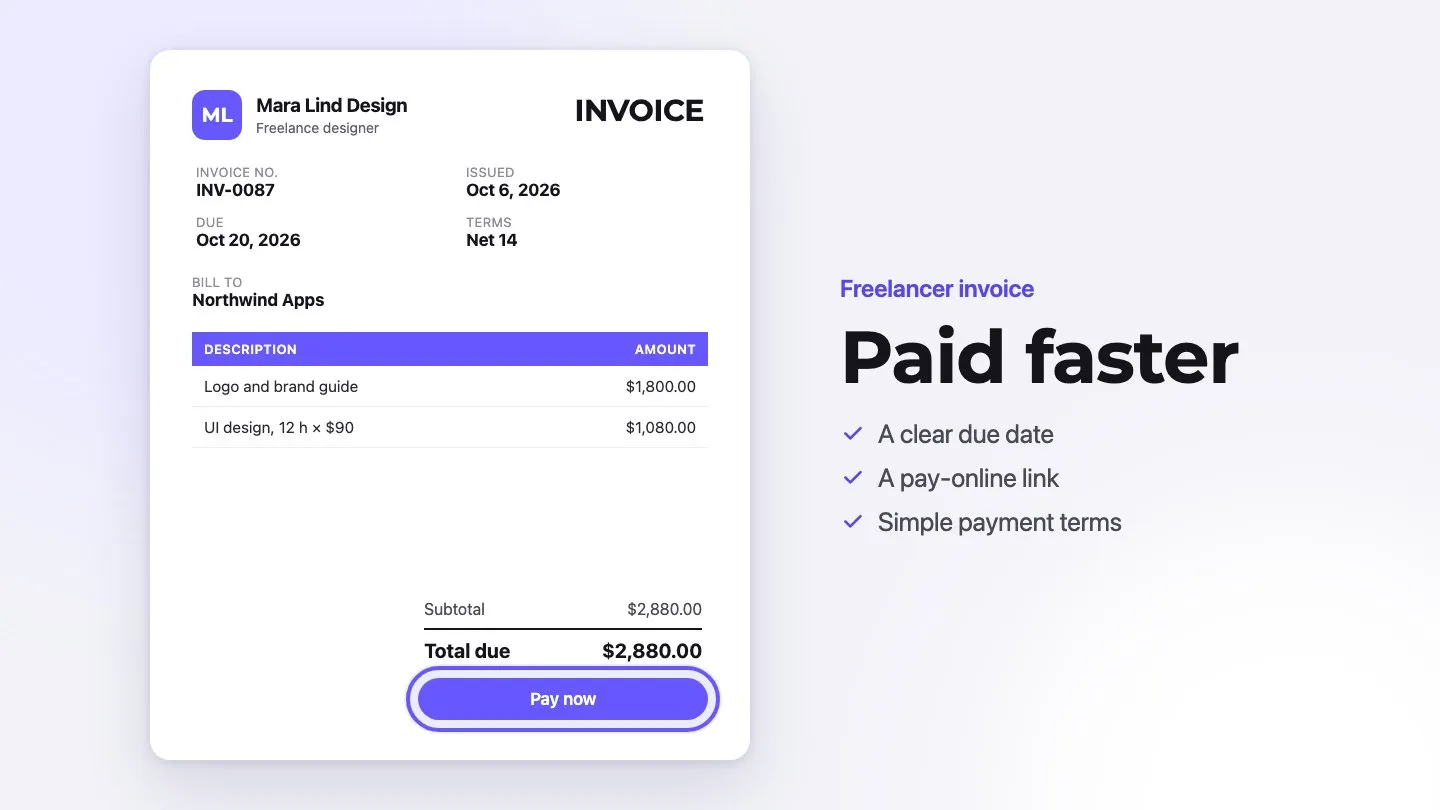
Your business details need prominent placement at the top of every invoice. Place your full name, complete address, phone number, and email address clearly. A professional logo strengthens your brand presence. Next comes your client’s information - business name, address, and invoice contact person. This clear routing proves vital, especially with larger organizations where invoices pass through multiple departments.
Project Details and Scope
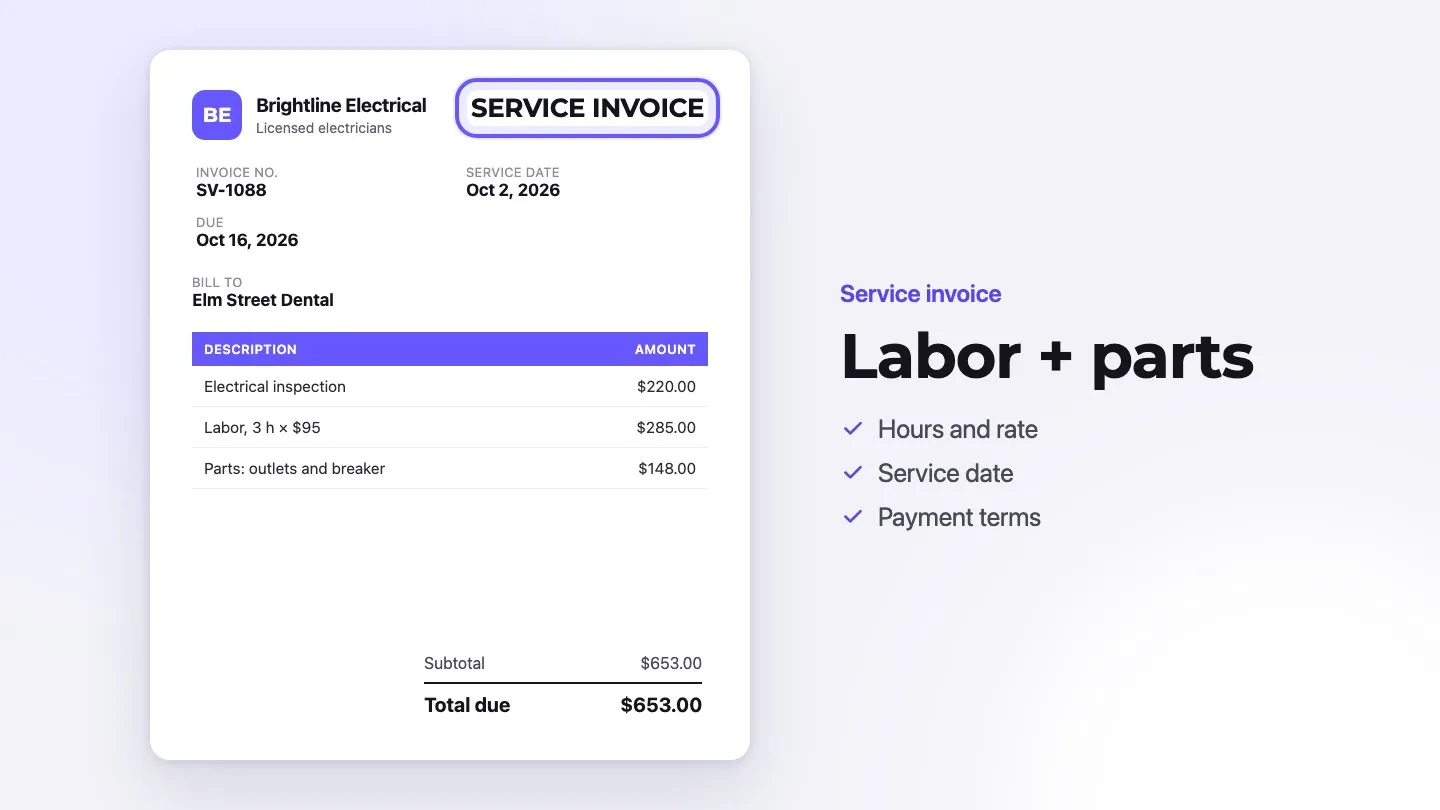
Service descriptions make or break your invoice’s effectiveness. Here’s our proven framework for detailing work:
| Component | Purpose | Example |
|---|---|---|
| Line Items | Shows specific work completed | Website redesign - Homepage |
| Quantities | Documents work volume | 40 hours @ $75/hour |
| Detailed Descriptions | Prevents confusion | “March 23 procurement report analytics - 4 hours” |
| Tax Items | Maintains transparency | GST 5% - $150 |
Payment Terms and Methods
Payment terms create the foundation for timely compensation. Include:
- Clear payment methods (bank transfers, PayPal, credit cards)
- Specific account details for easy transactions
- Standard payment timeline (14-30 days)
- Early payment incentives (for example, 2% off for paying within 10 days)
- Late payment policies with specific fees
Remember to maintain consistent invoice numbering and include both issue and due dates.
Value matters more than formality - your invoice should tell the story of your work’s worth while making payment simple for clients. Each component serves a specific purpose in getting you paid promptly while building professional relationships.
Setting Up Your First Freelance Invoice
Talking about money isn’t easy, especially when starting your freelance journey. Proper invoice setup makes the difference between steady payments and constant collection headaches.
Choose an Invoice Template
Professional templates save precious time while protecting your business interests. Word, Excel, or PDF formats work well - pick what matches your workflow. Quality invoicing software becomes worth its weight in gold as your client list grows.
Add Your Business Branding
Your invoice tells clients who you are and what you stand for. Place your logo prominently in the upper corner. Colors and fonts should match your brand identity. Strong branding across all materials builds trust and recognition.
Create a Numbering System
Proper invoice numbering prevents countless headaches during tax season. Common options:
| Invoice Numbering Options | Best For |
|---|---|
| Date-based (YYMMDD-Number) | Chronological tracking |
| Client-based (Client initials) | Multiple client management |
| Project-based (Project name) | Single-client projects |
| Sequential (Simple numbers) | Basic organization |
Start with at least three digits - many pros use up to ten. Beginning at 1000 rather than 1 makes your business appear more established. Your invoice number needs clear visibility near the top, using bold formatting.
Note that consistency matters more than complexity. Simple sequential numbers often work best for tracking and taxes. Keep those records safe - you’ll need them for 3-10 years depending on local requirements.
Value matters more than fancy formatting. Your invoice system should make life easier for both you and your clients. These foundational elements create the professional framework your growing business needs.
Writing Clear Service Descriptions
Talking about money gets easier when clients understand exactly what they’re paying for. Experience shows that clear service descriptions prevent payment delays and build trust with clients.
Break Down Your Services
Your service descriptions paint the picture of your work’s value. Vague terms like “writing services” tell clients nothing. Instead, write “2,000-word blog post on SEO best practices - includes keyword research and meta descriptions”.
Ready to make your service descriptions work harder? Here’s what successful freelancers include:
- Project scope with measurable deliverables
- Format specifications and delivery method
- Special requirements or constraints
- Client responsibilities and deadlines
Note that recurring services need separation from one-time tasks. This helps clients budget effectively and prevents scope confusion.
Include Time and Quantity Details
Time tracking makes or breaks your professional credibility. Hourly invoices work best with these four columns:
- Task descriptions that tell the full story
- Rates that match your agreement
- Hours worked with daily breakdown
- Total amounts that add up clearly
Fixed-rate projects need equal clarity. Spell out exactly what the project fee includes - number of revisions, delivery timeline, and any modifications.
Create separate sections for additional costs during project execution. Travel expenses, software purchases, or resource fees need individual line items. This prevents those awkward “I didn’t know that would cost extra” conversations.
Professional time tracking tools prove their worth through detailed reports. These reports justify your charges and build trust, especially with new clients questioning your rates.
Remember - consistent rates across similar services prevent confusion. Different rates for various tasks? List them separately on your invoice. Your clients will thank you for the clarity, and you’ll spend less time explaining your bills.
Detailed service descriptions do more than justify prices - they showcase your professional worth and attention to detail.
Calculate Pricing and Taxes
Talking about money isn’t just about naming your price - it’s about building sustainable rates that reflect your true worth. Experience shows that proper pricing and tax planning make the difference between struggling and thriving as a freelancer.
Set Hourly or Project Rates
Your heart races when a client asks about your rates. We’ve been there. The key lies in understanding what your time is really worth. Rates vary enormously by field, experience and location, so research what clients pay for your kind of work. Your base rate needs to cover:
- Living expenses that keep you stable
- Business costs that help you grow
- Profit margins that build your future
Project-based pricing changes the game entirely. Rather than watching the clock, you focus on delivering value. Efficient work on fixed-price projects often brings better returns. Monthly retainers? Even better - they create predictable income streams.
Add Applicable Taxes
Tax surprises can wreck your freelance business. A common rule of thumb is to set aside around 30% of earnings for taxes; the right share depends on your income and where you live. In the US, that covers:
- Regular income tax based on earnings
- Self-employment tax at 15.3% for Social Security and Medicare (the Social Security part applies only up to an annual earnings limit)
- State and local taxes where applicable
In the US you’ll usually also pay estimated tax quarterly once you expect to owe $1,000 or more for the year.
Track every business expense like your success depends on it - because it does. Different locations mean different tax rules. When in doubt, professional tax advice pays for itself.
Include Additional Charges
Ready to stop giving away extra value for free? Professional freelancers charge for these extras:
| Service | How to Charge |
|---|---|
| Rush Work | A surcharge on your standard rate, agreed in advance |
| Late Payment Fees | A fee or monthly interest stated in your contract (check local legal limits) |
| Meeting Time | Regular hourly rate |
| Travel Expenses | At cost, or cost plus an agreed handling fee |
| Software Costs | Direct pass-through |
Value matters more than price - but only when clients understand what they’re paying for. Spell out these charges in your initial agreement. List each extra cost separately on invoices with clear descriptions.
Remember - detailed expense records protect your business. Keep every receipt, track every cost, and maintain professional standards in all financial dealings. Your future self will thank you come tax season.
Send and Track Your Invoice
Waiting on unpaid invoices is stressful. Your heart races every time you check your bank account for pending payments. Proper invoice tracking makes the difference between steady cash flow and constant payment anxiety.
Select Delivery Method
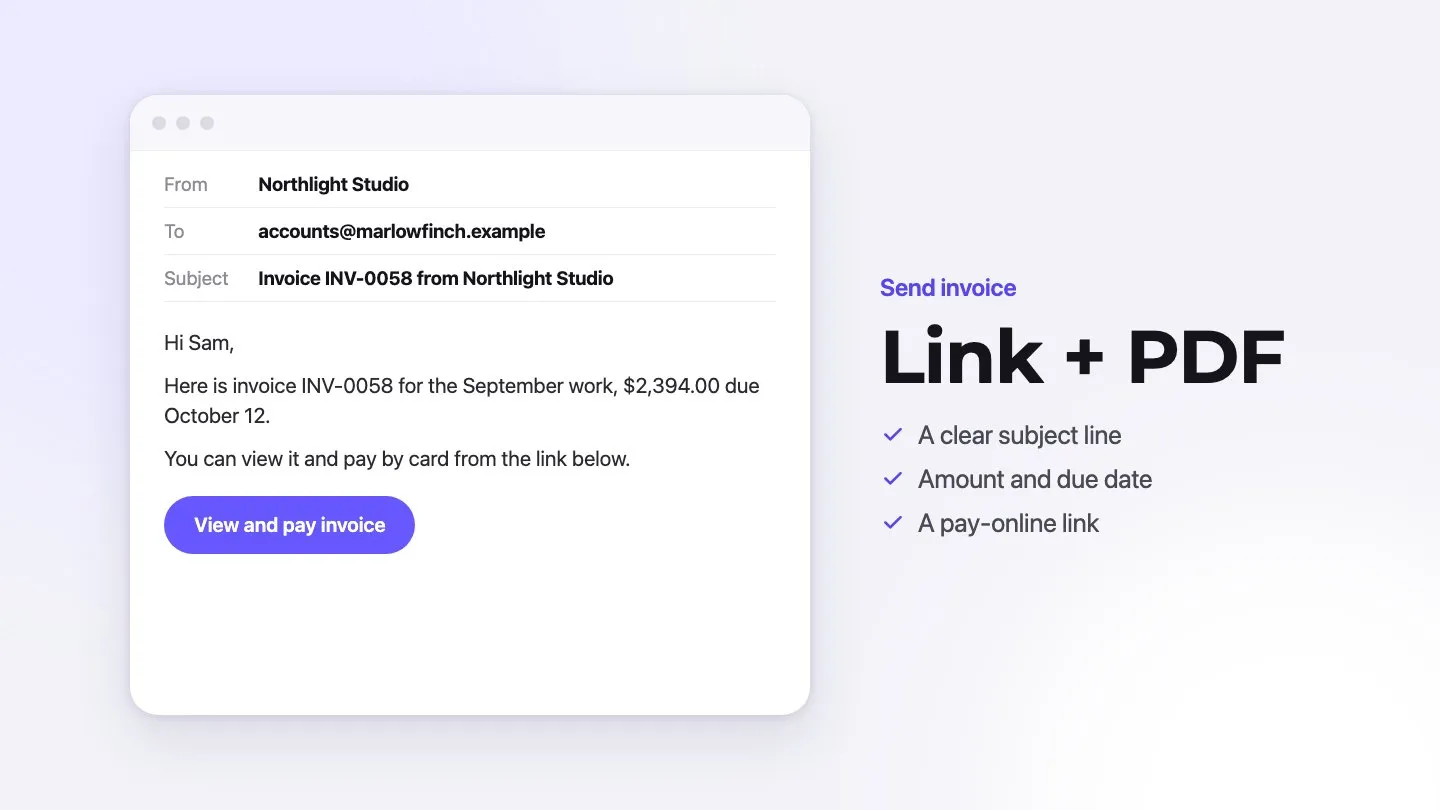
PDF attachments through email stand as the professional standard for invoice delivery. This method keeps documents secure while staying accessible for clients. Your email subject line needs your invoice number and business name - this small detail speeds up payment processing significantly.
Note that client preferences matter most. Large organizations often require specific portals or accounting systems for invoice submission. Double-check these requirements first - wrong delivery methods mean payment delays. For bigger clients, verify the correct department and contact person.
Follow Up Professionally
Invoicing tools that tell you when a client has viewed an invoice make follow-up much easier. Here’s a simple follow-up timeline:
| Timeline | Action | Tone |
|---|---|---|
| Days 1-3 | Payment due reminder | Gentle nudge |
| Day 7 | Receipt verification call | Professional check-in |
| Day 14+ | Payment terms restatement | Firm reminder |
| Day 30+ | Project manager escalation | Serious concern |
Clear records of payment communications protect your interests. Each follow-up message needs personalization based on your client relationship. This approach maintains professionalism while getting results.
Early Payment Incentives Work
A small discount, such as 2%, can motivate faster payments from regular clients. Document these terms clearly in your initial agreement to prevent misunderstandings.
Invoicing software simplifies the entire process. It monitors payments, keeps your records safe, and often lets clients pay online, speeding up the whole cycle.
Look for these features:
- Secure, encrypted connections
- Online payment options your clients actually use
- Invoice status tracking (sent, viewed, paid)
- Easy reminders, automatic or one-click
- Mobile accessibility
Regular project milestone updates strengthen your payment position. This proactive approach keeps clients informed and reduces payment delays. Remember - professional persistence pays off when collecting what you’ve earned.
Conclusion
Professional invoicing makes the difference between thriving and struggling as a freelancer. Proper invoicing transforms payment collection from a constant worry into a smooth, reliable process.
Your invoice tells more than “please pay me.” It speaks volumes about your business:
- Shows your professional worth
- Protects you legally
- Creates clean tax records
- Builds lasting client trust
Ready to stop chasing payments and start growing your business? With invoice maker Invoxa you create a branded invoice in minutes, see when your client has viewed it, and let them pay by card, Apple Pay or Google Pay through your own Stripe account. Invoxa doesn’t send automatic reminders, so use the follow-up timeline above and resend the invoice when a payment is late.
Organized invoicing leads to predictable cash flow. Start with clear templates, set firm payment terms, and follow up professionally. Your future self will thank you for building these foundations today.
FAQs
Q1. What is a freelancer invoice? A freelancer invoice is a formal document that independent contractors, self-employed individuals, or gig workers use to bill clients for their services. It typically includes essential details such as the freelancer’s name, contact information, invoice number, date, payment terms, a breakdown of services provided, rates, total amount due, and accepted payment methods. A well-structured invoice ensures transparency, facilitates prompt payments, and serves as a legal record of the transaction. Freelancers often use invoicing software or templates to streamline the process, maintain professionalism, and track earnings efficiently.
Q2. How do I create a professional freelance invoice? To create a professional freelance invoice, include your business details, client information, a clear description of services provided, payment terms, and a unique invoice number. Use a clean, branded template and consider using invoicing software for efficiency and consistency.
Q3. What essential components should a freelance invoice contain? A freelance invoice should contain your contact information, client details, invoice number, date of issue, payment due date, itemized list of services with descriptions and costs, total amount due, accepted payment methods, and any additional terms or conditions.
Q4. How do I determine pricing for my freelance services? Determine pricing by considering your expertise level, market rates, project complexity, and desired profit margin. You can set hourly rates or project-based fees. Research what clients in your field and region pay, and make sure your rate covers your costs, taxes and time off.
Q5. What’s the best way to send and track freelance invoices? The best way to send invoices is via email as PDF attachments. Use invoicing software that shows when clients view invoices, and send reminders when payments are due. Follow up professionally on overdue payments and consider offering early payment incentives to encourage prompt settlements.
Q6. How should I handle taxes on my freelance income? A common rule of thumb is to set aside around 30% of your earnings for taxes. In the US, this covers income tax and self-employment tax (15.3% for Social Security and Medicare). Keep detailed records of all income and business-related expenses, as these can offset your taxable income. Consider consulting with a tax professional for specific advice based on your location and services.